Mixed Diet for Psittacines: Science Demystifying the Fear of Natural Foods
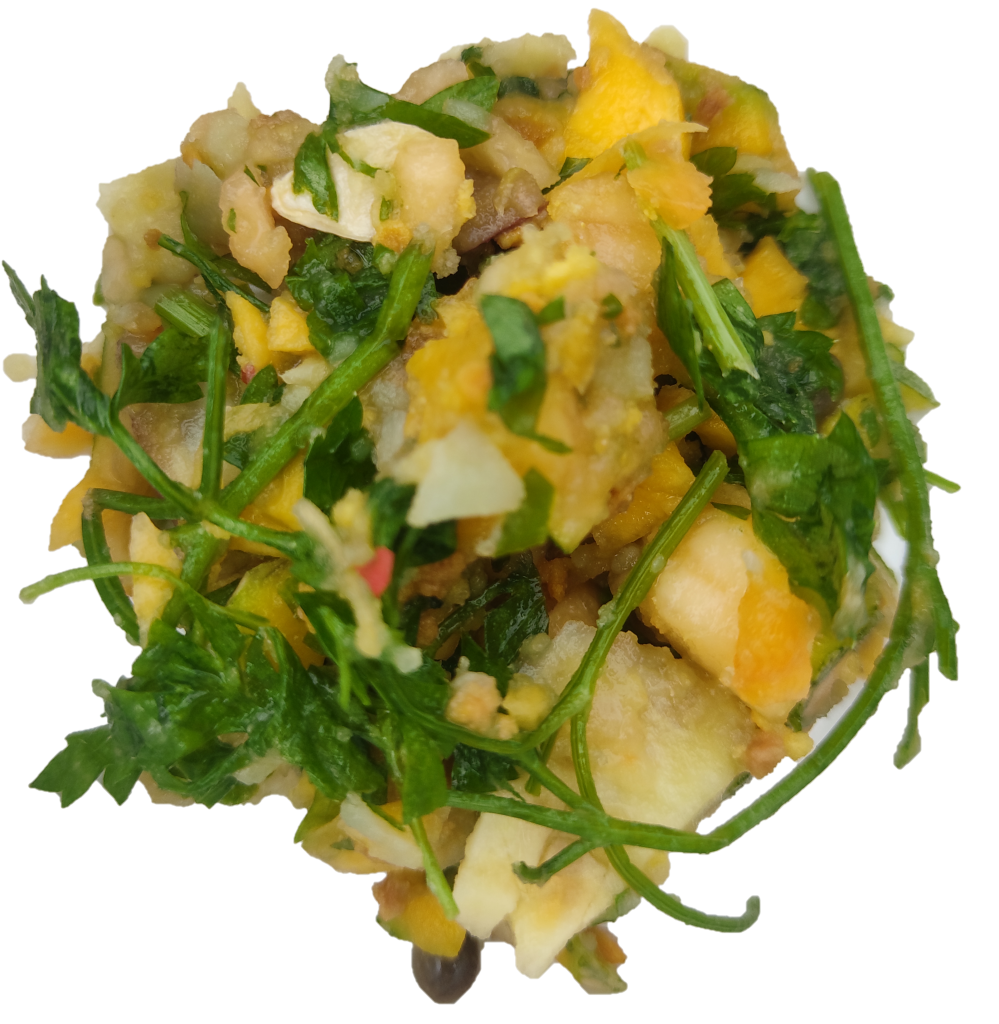
Mixed Diet for Psittacines: Science Demystifying the Fear of Natural Foods 1. Introduction: The Modern Breeder’s Dilemma Many psittacine breeders face a dilemma: they recognize that their birds enjoy variety, but fear that using fresh foods might “dilute” the nutritional precision of extruded pellets. There is a lingering concern that offering fruits and vegetables could disrupt the balance of minerals and vitamins carefully formulated by manufacturers. As an aviculturist specialized in nutrition, my goal is to demystify this hesitation using solid scientific evidence—not just years of practical experience providing daily vegetables and fruits to my own flock of parakeets. The study by Brightsmith (2012), titled Nutritional Levels of Diets Fed to Captive Amazon Parrots, proved that supplementing with vegetables and fruits at a ratio of 25% of wet weight is not only safe but also essential for physical and mental health, without compromising the bird’s nutritional balance—as long as the base (main meal) is a formulated feed. 2. The Hidden Danger of Seed-Based Diets Historically, seed-based diets were the standard, but modern science is relentless: they are inherently deficient and dangerous. However, I am not one of those who demonize seeds! Good mixes have their value, but there is always a considerable risk of nutritional imbalances when using them as a dietary foundation. This is because, in general, portions are not calculated according to the birds’ energy needs, which always results in portions much larger than they actually require—which, combined with feed selectivity, is a disaster. The study by Brightsmith highlights what I have been saying: that the problem is aggravated by the bird’s behavior, the so-called “selective consumption.” In captivity, parrots actively choose the fattiest seeds (such as sunflower and safflower), making the consumed diet much worse than the diet offered. The identified risks include: • Obesity and Weight Gain: In the study, birds in the control group (seed-rich diet) showed a weight gain of 6.1%, while birds on balanced diets maintained stable weight (a variation of only 0.05%).• Excess Lipids: Fat levels well above maintenance recommendations.• Critical Mineral Deficiencies: Even in mixed diets where seed is predominant, severe deficiencies of Calcium (Ca), Sodium (Na), and Iron (Fe) were observed.• Metabolic Imbalance: An extremely low Calcium-to-Phosphorus (Ca:P) ratio, compromising long-term bone and metabolic health. An aspect rarely discussed by psittacine nutrition experts concerns dominance relationships among specimens. The combination of seed mixes, feed selectivity, and social hierarchy can result in a true nutritional disaster. In community aviaries where multiple birds coexist in the same space, it is common for some individuals to establish themselves as dominant. These birds are the first to reach the food bowls and tend to select, for example, sunflower seeds, leaving the remaining options for others. The problem is that these very dominant individuals end up being the most prone to developing nutritional deficiencies in the medium and long term. Pellets are efficient in resolving this issue. 3. Study Analysis: Transition and Nutritional Results The study monitored Amazon parrots of the species Amazona barbadensis, Amazona aestiva, Amazona ochrocephala, and Amazona finschi. The table below summarizes how the transition to diets with a higher proportion of extruded pellets and fewer seeds dramatically alters the ingested nutritional profile: Diet Model // Composition (Wet Weight) // Observed Nutritional Results Seeds / Vegetables / Pellets // 28% seeds, 49% vegetables, 23% pellets. // Unacceptable. Calcium, Sodium, and Iron deficiencies. Excessive fat content. Low-Seed // 18% seeds, 22% vegetables, 60% pellets.// Intermediate. Calcium and mineral levels become acceptable, but fat still remains above recommended levels. Pellets/Vegetables (Mixed) // 25% vegetables and fruits, 75% pellets.// Excellent. Met almost all nutritional recommendations and maintained stable weight. 4. The 25% to 60% Rule: Why Vegetables Don’t “Dilute” Pellets The secret to understanding why you can offer a certain amount of fresh foods without unbalancing nutrition lies in the distinction between Wet Matter (weight on the plate) and Dry Matter (actual nutrients). Items like apples, grapes, and celery offered during the study contain about 85% water. On the other hand, extruded pellets (dry) are highly concentrated. Reference cited in the Brightsmith study demonstrates that even if you offer 60% vegetables and fruits by wet weight, after the bird consumes them and the body processes them, these items will represent only about 20% of the total Dry Matter ingested. The other 80% of nutrients will come from the formulated pellets. Therefore, visual “volume” does not equate to “concentration” in the bloodstream: vegetables provide hydration and fiber, while pellets ensure the load of Protein, Amino Acids, and Minerals. However, I need to clarify that everything has a limit, and it is precisely at this point that extrapolating results—such as those from this research—can cause real harm to the nutritional balance of your bird’s diet. The fundamental question is: how much fresh food can I offer without compromising pellet consumption? I have argued, especially in this aspect, that portions of fresh foods should be calculated based on the bird’s Maintenance Energy Requirements, considering the energy density of the foods offered and well-defined proportions of vegetables, fruits, and protein sources, in order to respect the natural eating habits of each species. This is exactly what the algorithms of the Dietbird Diet Calculator do: they deliver structured and energetically balanced feeding plans, calculated with precision from the bird’s energy needs and the energy value of foods. The proportions that I currently consider ideal can be found in the Dietbird Guide – Nourishing with Science and Precision. 5. Beyond Nutrients: The Value of Foraging As an expert, I reinforce that psittacine nutrition is not only physiological but also psychological. The exclusive offering of pellets, although nutritionally complete, can become monotonous for highly intelligent birds. We have already seen in a previous article the psychogenic damage caused to parakeets and parrots due to monotonous feeding management without foraging. The study emphasizes that the inclusion of natural foods is a tool for environmental enrichment. The foraging behavior—the act of manipulating, peeling, and choosing between different textures—is essential to prevent chronic stress and
Your parakeet eats more than it needs! Wouldn’t it be interesting to calculate their diet?
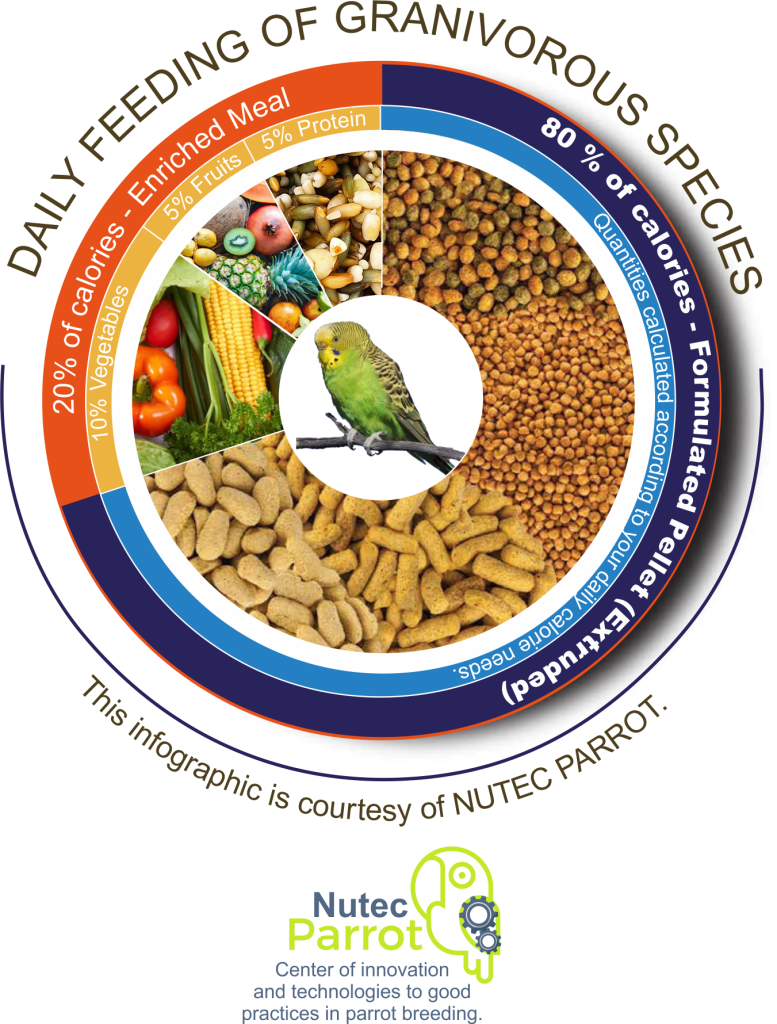
Your parakeet eats more than it needs! Wouldn’t it be interesting to calculate their diet? As a bird owner, you want the best for your bird. It’s common to believe that providing a bowl full of different seeds, nuts, and grains is a healthy and natural way to feed a parrot. After all, the variety looks appealing and mimics what a bird would find in nature. But what if this well-intentioned practice is unintentionally causing harm? This research (Saldanha et al., 2023) yields surprising and impactful findings about the feeding habits of ringneck parrots, lovebirds, and cockatiels. The results challenge long-held assumptions and reveal why seed mixing as a staple food, or even as a supplement provided ad libitum, can be a direct path to nutritional disaster. Your Bird Eats for Pleasure, Not for Health The first and most important truth to understand is that parrots are selective feeders. When faced with a mix of different foods, they do not eat a little bit of everything to create a balanced meal. Instead, they consistently pick and eat their favorite items, leaving the rest behind. This is a crucial concept for owners because a bird’s preferences are not a reliable guide to what is nutritionally adequate. They do not possess an innate “nutritional wisdom” that leads them to choose what their body needs. The study’s authors state this directly: “psittacines do not select any food to promote health, but solely to experience pleasure from consuming it and to follow habits.” As a psittacine nutrition specialist, it breaks my heart to see fellow breeders place a bowl of pellets and, right next to it, a bowl of seeds in the cage—a mix that clearly meets the bird’s daily energy needs but leads to nutritional imbalance and wasted feed. Sunflower Seeds: The Fat Trap The study provided a clear example of this selective feeding in action. When ringneck parakeets were given a mix that included extruded pellets, millet, canary seed, and high-fat sunflower seeds, they showed an overwhelming preference for the sunflower seeds. This choice had significant nutritional consequences. The selective consumption of sunflower seeds resulted in a diet with a much higher intake of fat and total energy (calories). The study revealed that these birds’ fat intake reached an impressive 54.5% on the sunflower seed-based diet, compared to just 4% on a diet without them. For most pet birds, which are far more sedentary than their wild counterparts, this type of high-fat diet is a primary contributing factor to obesity and other serious lipid-related health problems. The Hidden “Calcium Crisis” in Seed-Based Diets While fat and calories are a major concern, the study revealed an equally dangerous and less obvious problem with mineral intake. In diets where birds could choose their preferred seeds, calcium intake was dangerously low (often below 0.3%) and the crucial calcium-to-phosphorus ratio was severely imbalanced (less than 1:1). Crucially, only birds fed a diet consisting exclusively of formulated extruded pellets managed to meet their minimum calcium requirements. This chronic mineral deficiency in seed-based diets poses a serious risk to avian bone health. As the study’s authors note, these conditions can have severe consequences: “Inadequate calcium supply and insufficient calcium:phosphorus ratio in seed-based diets are known causes of impaired bone mineralization, leading to nutritional secondary hyperparathyroidism, rickets, or osteomalacia.” Your bird is likely overeating calories (THIS IS WHERE DIETBIRD COMES IN). A bird’s Maintenance Energy Requirement (MER) is the number of calories it needs to perform basic daily functions. The study compared the bird’s actual energy intake to their estimated MER and found a consistent pattern of overconsumption. For all three species, energy intake on the high-fat sunflower seed diet was significantly higher than their estimated daily needs. Perhaps even more surprisingly, even the birds fed only the “healthy” extruded pellets consumed more energy than their estimated MER. This finding highlights a fundamental reality for birds in ex-situ breeding. Captive birds are far less active than wild parrots, which spend much of their day foraging and flying. This constant overconsumption of calories, even from seemingly healthy foods like pellets, is a primary contributing factor to weight gain and obesity in pet birds. So what now? Does it make sense for you to calculate the correct amount of food based on your bird’s energy needs? Conclusion: Rethinking Dietary Management for a Healthier Future The core message of this research is clear: simply offering a varied mix of seeds is not enough to ensure your bird’s health and can lead to serious, long-term problems. Due to their innate tendency to be selective feeders, birds do not possess the “nutritional wisdom” needed to balance their own diet. They will invariably choose palatable, high-fat, and familiar seeds over healthier options. And it’s no use placing mineral blocks, vitamins, or pellets in seed mixes: the birds will always select their preferences and, as the amounts provided are often more than necessary, they will fill up on what they like most and leave aside what they like least, leading to nutritional deficiencies. But hold on, this doesn’t mean natural foods cannot be provided. I argue that the ideal diet for our birds is calculated, mixed, and species-specific, with extruded pellets as the food base, complemented with vegetables, fruits, grains, and seeds. After all, pellets, while a complete food, are not a complete diet and therefore should not be the only food given. We’ll explore this in another article. DIETBIRD IS THE ONLY SOFTWARE IN THE WORLD SPECIFICALLY FOR PSITTACINES THAT PROVIDES CALCULATED, BALANCED, AND TAILORED DIETS, WITHOUT HAVING TO GIVE UP ANY FOOD. CLICK HERE AND GET STARTED NOW! This article was written by: Diógenes ABOUT THE AUTHOR THIS ARTICLE IS BASED ON THE FOLLOWING RESEARCH: Saldanha, Andre & Machado, Rodrigo & Decker Fernandes, Barbara & Oliveira, Júlia & Amorim, Gabriela & Moreno, Tatiane & Rocha, Chayane. (2023). VOLUNTARY INTAKE OF CAPTIVE PSITTACINES FED MIXED DIETS OF SEEDS AND EXTRUDED FEED. Archives of Veterinary Science. 28. 10.5380/avs.v28i3.90983. Listen to the podcast about the cited research: Veja