Are You Feeding Your Parrot Wrong? 5 Surprising Truths Revealed in the Dietbird Guide: Nourishing with Science and Precision.
Introduction
Every psittacine owner wants to provide the best possible care. But what does “the best” mean? In the wild, a parrot is a seed predator, flying long distances to locate flowering trees, insects, unripe fruits, and nuts. Motivated by this image, many owners replicate what they believe to be a “natural” diet. However, this well-intentioned practice is based on myths that can unintentionally harm the health of our companions. The truth is that a parrot’s nutrition in a domestic environment is far more complex. Next, we will reveal five surprising truths, based on scientific research and unveiled in the Dietbird Guide, that will transform how you think about your parrot’s diet.
Stop Imitating the Wild Diet is the First Step
One of the biggest misconceptions is trying to faithfully replicate a wild parrot’s diet. The reason is simple: the lifestyle of a captive bird is drastically different.
The main difference lies in energy expenditure. In the wild, a parrot flies long distances daily in search of food, which requires a diet with very high energy density. In contrast, a pet bird performs much less flight activity and has food readily available, resulting in substantially lower energy expenditure.
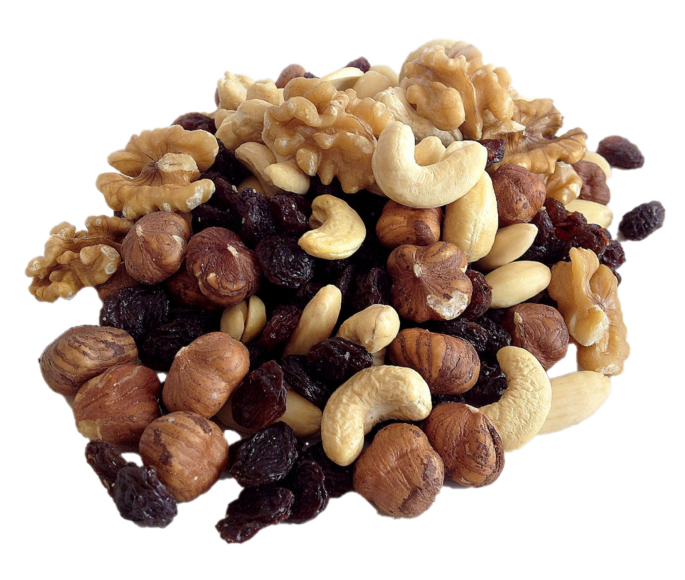
Offering high-energy foods, such as seeds and nuts—essential in the wild—to a bird with a low activity level is a recipe for disaster. This combination inevitably leads to obesity and a significant reduction in life expectancy. The goal is not to replicate the wild diet but to adapt its two essential principles: ensure dietary variety and increase food-seeking time by promoting foraging.
- That ‘Gourmet’ Seed Mix is, in Fact, a Nutritional TrapMany owners believe that a colorful, varied seed mix is the best option. However, offering seed mixes “at will” is one of the primary causes of health problems in psittacines.
The problem lies in an instinctive behavior called food selectivity. When faced with a mix, parrots naturally choose the most palatable items, which are almost always the highest in fat (like sunflower seeds) and poor in essential nutrients.
Even if the packaging promises a “balanced” mix, it becomes completely unbalanced the moment the bird selects only what it likes most. This practice is a direct cause of serious nutritional deficiencies, kidney disease, hepatic lipidosis, and obesity. For this reason, the scientific recommendation is clear: avoid offering seed mixes as the dietary foundation.
“Complete Food” Does Not Mean “Complete Diet”
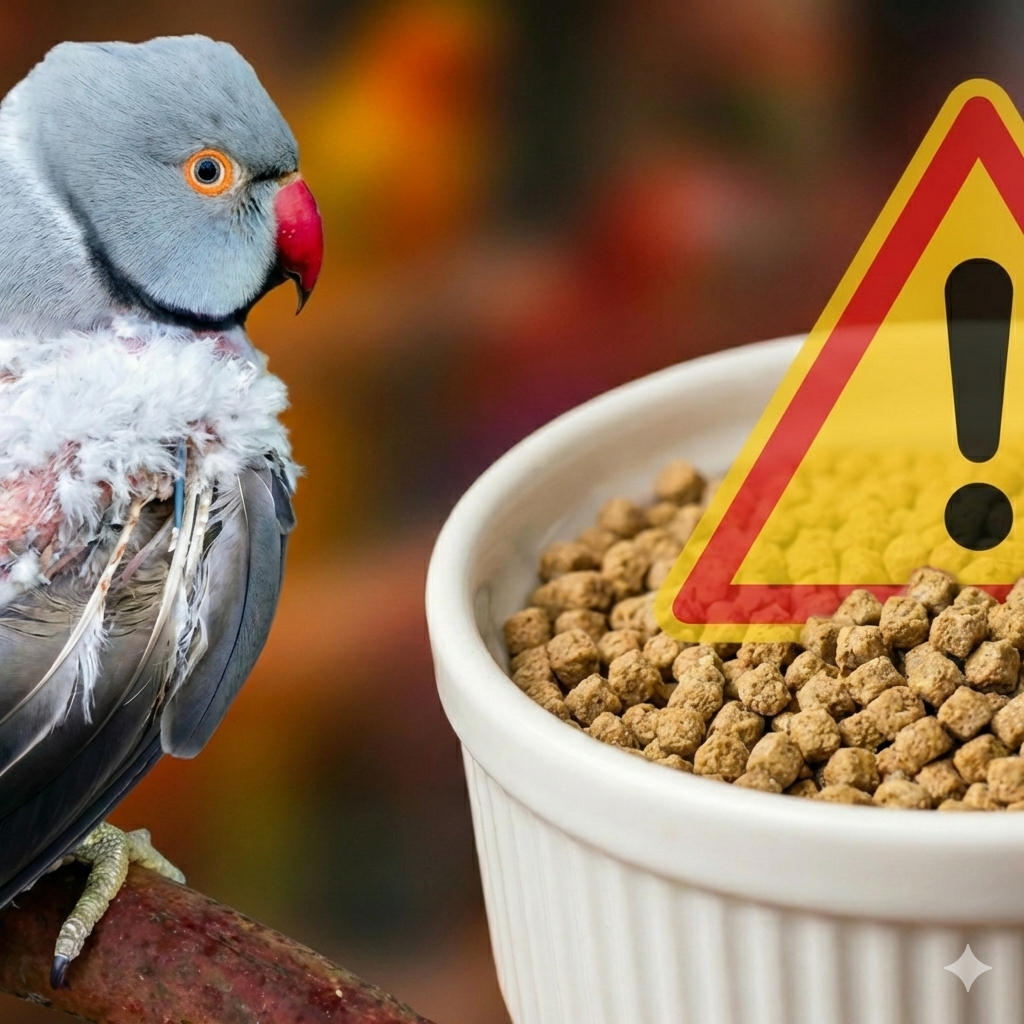
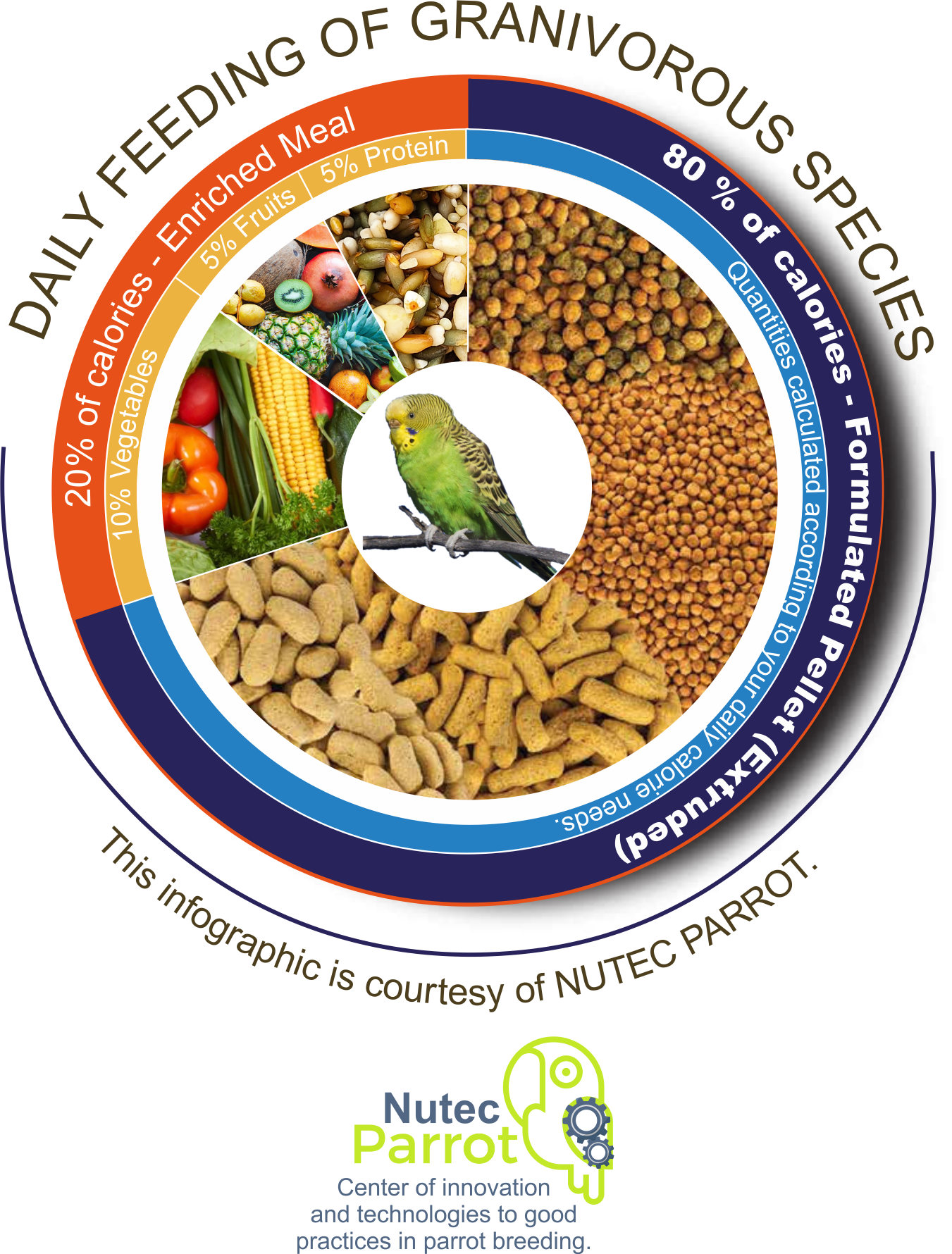
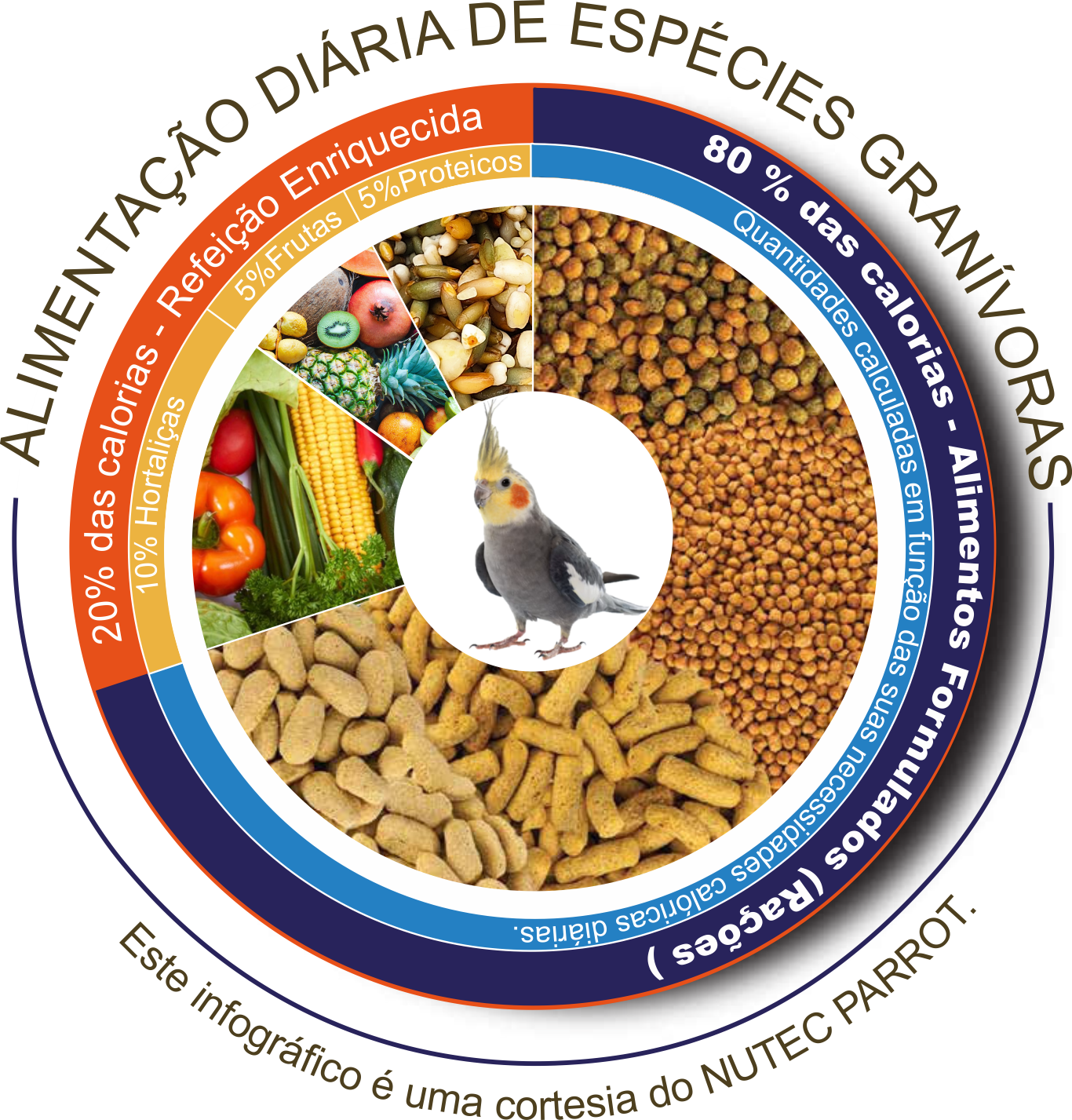
Upon discovering the dangers of seeds, many owners switch to extruded foods (the well-known pelleted feeds), believing they solve all nutritional issues. And indeed, formulated foods are the recommended foundation for the diet, as their uniform format prevents selective feeding and ensures a balanced nutritional profile.
However, here is the crucial point that many fail to perceive: a single food, even if labeled as “complete,” does not constitute a complete diet.
“it is important to emphasize that a formulated food, although complete, does not constitute a complete diet. A complete diet involves a comprehensive feeding plan, which defines all the nourishment capable of guaranteeing your bird’s physical and mental health.”
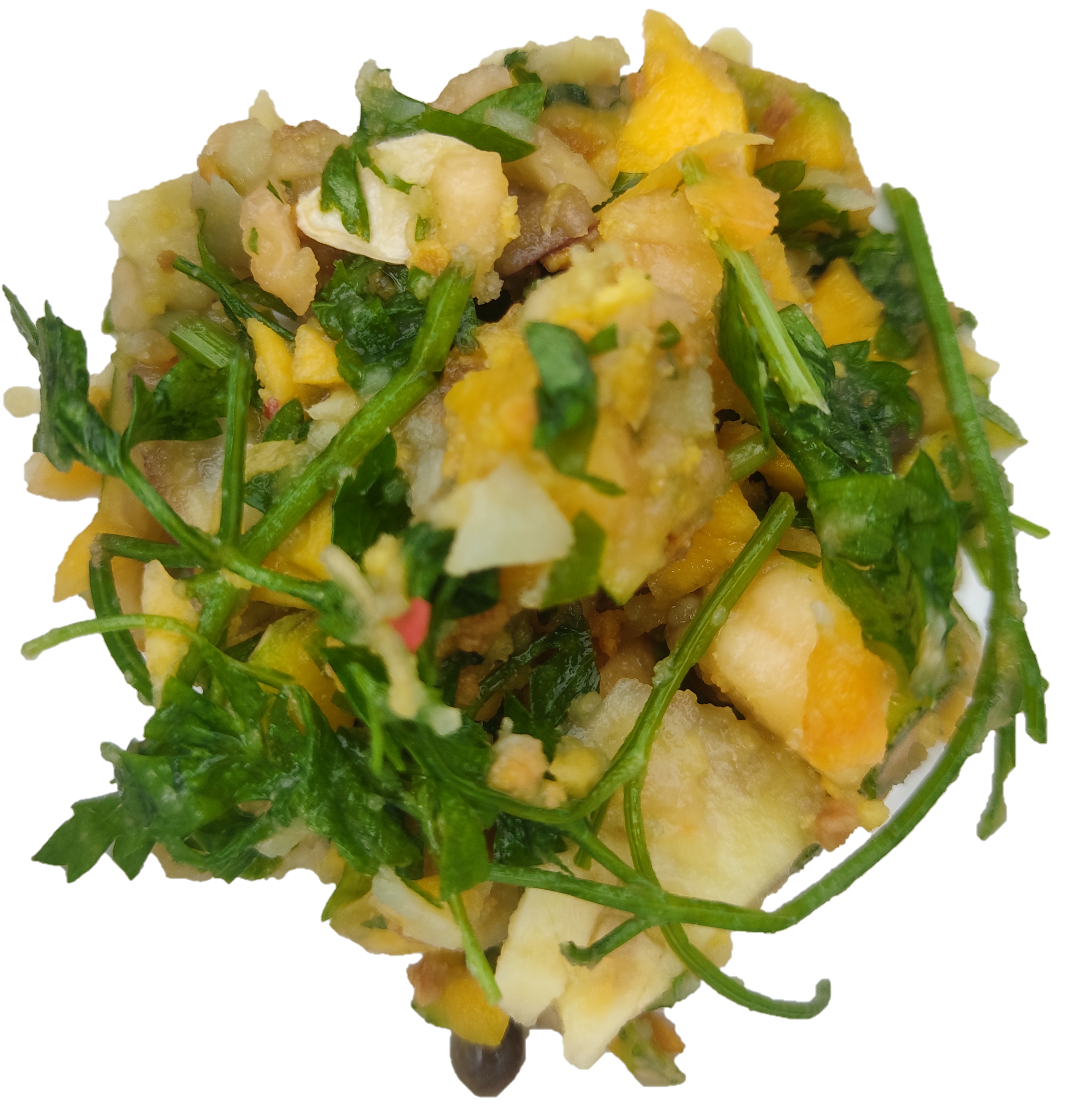
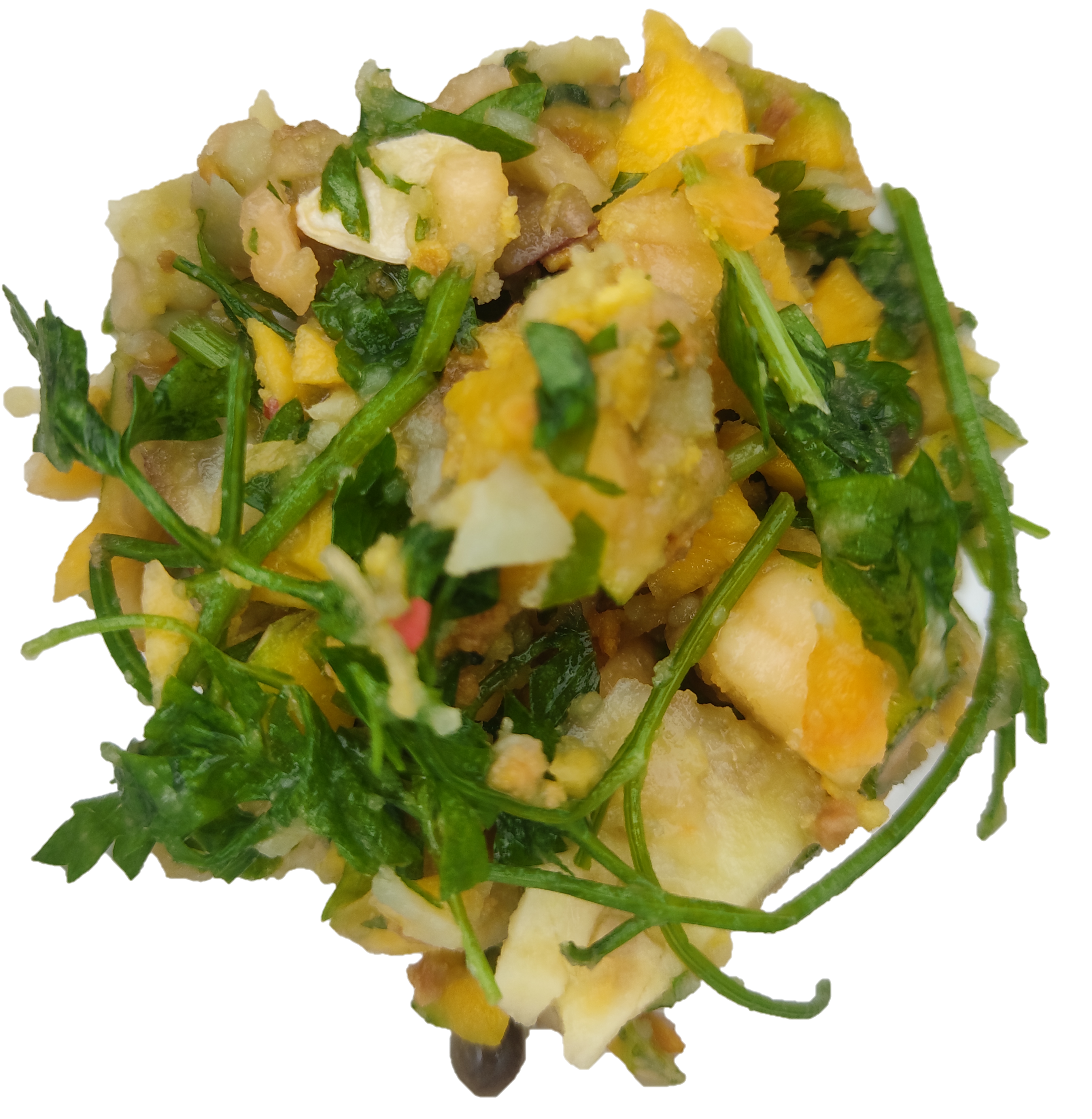
A truly complete diet goes beyond the pellet bowl. It incorporates variety with other food groups (such as vegetables, fruits, grains, seeds, and nuts) in precise proportions specific to each genus of psittacines, promotes mental well-being through foraging challenges, and enriches the bird’s daily life by stimulating natural behaviors.
There is No “One-Size-Fits-All Parrot Diet,” Only Your Parrot’s Diet
The idea of a universal diet that works for all psittacines is a dangerous myth. Nutritional needs vary drastically between species, and an effective feeding plan must be individualized, considering multiple factors.
The main factors that define your bird’s unique requirements are:
Species: The needs of a Macaw, which requires more fat in its diet, are completely different from those of a Cockatiel, which is prone to obesity. An Eclectus Parrot, in turn, has a sensitive digestive tract that requires avoiding highly fibrous vegetables like kale.
Region of Origin: A surprising fact is that psittacines from temperate regions, such as Australia and New Zealand (Cockatiels, for example), have a basal metabolic rate 21% higher than other species, which directly impacts their caloric needs.
Activity Level and Environment: Environmental temperature and the opportunity to fly alter energy expenditure. A bird in a large, cold aviary will need more calories than one kept in an indoor cage in a warm climate.
Life Stage: Energy demands are not static. During periods of physiological stress, such as molting or breeding, caloric needs can increase by 30% to an impressive 200%.
Bad Habits in the Food Bowl Lead to Bad Behaviors in the Cage
The connection between diet and behavior is direct and often underestimated. Inadequate nutrition doesn’t just affect physical health; it’s one of the primary causes of behavioral problems.
The statistic is alarming: it’s estimated that inadequate nutrition is a causal factor in 60% to 70% of medical conditions in pet psittacines.
Many cases of feather plucking (self-mutilation), for example, have a nutritional origin. Deficiencies can cause gastrointestinal pain, itchiness, or abnormal development of the skin and feathers. If not corrected, this physical discomfort can evolve into an obsessive feather-plucking behavior as a coping mechanism.
On the other hand, excess is also harmful. Diets overly rich in simple carbohydrates and fats can lead to a “hormonal overdrive.” This manifests in maladaptive behaviors such as aggression, excessive vocalization, feather destruction, and chronic frustration, turning the bird into an obsessed and hormonally exacerbated animal.
Conclusion: A New Approach to Your Bird’s Health
It becomes clear that properly nourishing a psittacine is not about simplistic rules, but rather a well-structured, scientific, and individualized plan. Your bird’s physical and mental health depends on an approach that goes beyond popular myths.
The diet’s foundation should be a high-quality extruded food, but the journey doesn’t end there. This base needs to be supplemented with seeds, grains, nuts, fruits, and vegetables—all integrated in precise proportions within a well-structured feeding plan. Only this approach guarantees a complete and balanced diet, essential for a long, healthy, and happy life.
Looking at your parrot’s diet today, what’s the first small change you can make to ensure a healthier and happier future for them?
Note: You don’t need to be a psittacine nutrition expert to improve your bird’s dietary management; you need Dietbird Pro!
This article was written by:
Diógenes
ABOUT THE AUTHOR
THIS ARTICLE IS BASED ON THE FOLLOWING RESEARCH:
Listen to the podcast about the cited research: