- Introduction: Nutrition as a Reproductive Trigger
For psittacine breeders, mastering nutritional management is essential for maintaining a healthy flock and achieving exceptional reproductive results. Diet, especially its seasonal variations, acts as one of the primary “supplemental factors” that modulate the reproductive hormonal axis, stimulating the onset of the breeding cycle. Lima et al. (2019) detail how nutritional management, by mimicking nature’s cycles, becomes a fundamental tool for optimizing reproductive results. The idea is to use food as another signal for the start of the breeding season. When we master dietary seasonality, it’s impressive how we can synchronize clutches within the aviary.
-
Mirroring Nature: The Dietary Cycle in the Wild
In their natural habitat, the reproductive cycles of psittacines are intrinsically linked to environmental factors. Pairing typically begins during the rainy season, which coincides with greater food availability and abundance. During this period, the bird’s natural diet becomes richer in fats and carbohydrates, and this change in nutritional composition functions as a direct trigger for the onset of reproductive activity.
-
The Breeding Season Diet: More Energy for Success
Replicating the natural stimulus in captivity requires a strategic dietary adjustment, providing the necessary energy for the entire reproductive cycle.
3.1. What to Change in the Diet?
Nutritional management during the breeding season should primarily focus on increasing fats and proteins. This more energy-dense diet acts as a direct “supplemental factor” on the bird’s hypothalamic-pituitary-gonadal axis—the hormonal command center that governs reproduction—signaling that environmental conditions are favorable.
Once, early in my breeding career, I asked a well-known breeder on social media what he thought about dietary seasonality. The answer was surprising: “I think when birds see a larger quantity of food, it stimulates them to breed.”
The scientific truth is that this stimulus is not visual but physiological. The birds perceive within their bodies that the energy density of their diet has changed. This is what actually promotes the hormonal cascades related to reproduction.
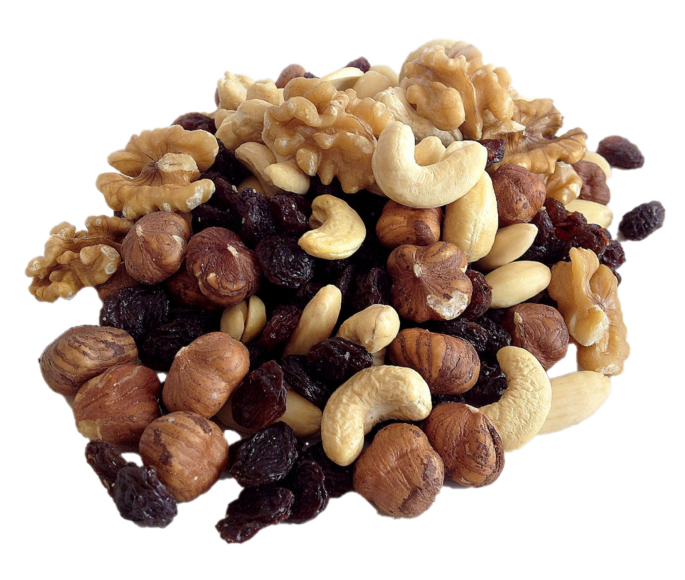
Therefore, I want to emphasize: do not base your feeding strategy on food groups with low energy density, such as vegetables and fruits. The main increase—which in Dietbird we call the energy meal—should be composed of foods from the grains, seeds, and nuts group, or even formulated feeds with high energy content, such as specific soft-food mixes.
3.2. When to Start the Change?
The transition to a high-energy diet should begin 4 weeks before the nesting season for each species. For example, for birds that nest in spring, the shift to a high-energy diet should start in July or August, aiming for the start of clutches in August or September.
For winter species, such as exotic psittacines, the most suitable period is May or June, aiming for the start of clutches in June or July (Brazil).
However, each breeder should also consider climatic factors, such as initiating this change after colder periods, when birds direct their energy toward life maintenance rather than reproduction.
3.3. A Note of Caution: Obesity
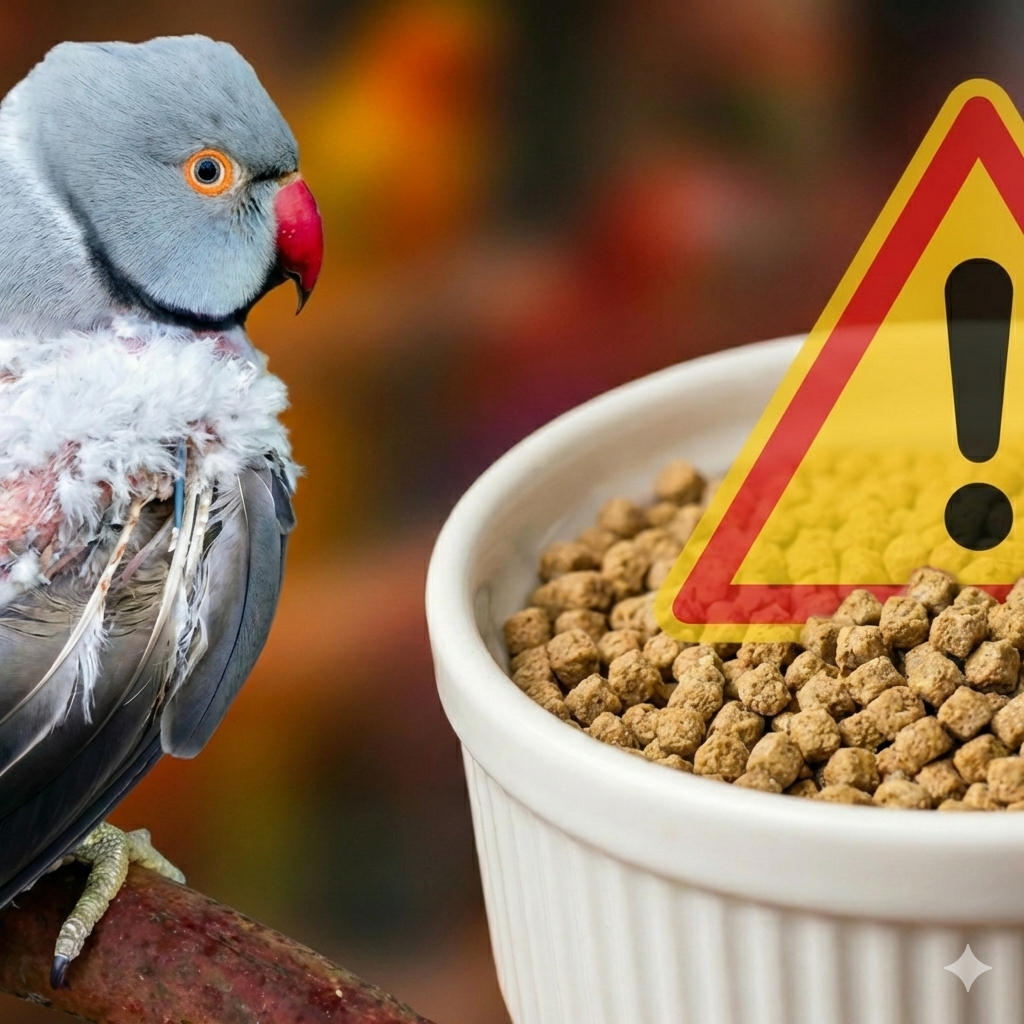
It is crucial to include a warning: birds showing signs of obesity should not be selected for breeding. In these cases, the body condition score must be adjusted beforehand, during the maintenance period, as excess weight compromises both health and reproductive success.
It is important to emphasize that obesity is a concerning reality in many aviaries. Often, what is mistaken for a robust build or good conformation may, in fact, be obesity. Many breeders get excited about birds with a large body volume, interpreting it as a sign of quality when they are actually facing a health problem that needs to be corrected.
-
Building the Aviary Menu: Practical Recommendations
The structure of an effective daily feeding plan for psittacines in captivity is based on three fundamental pillars:
-
The Dietary Foundation:
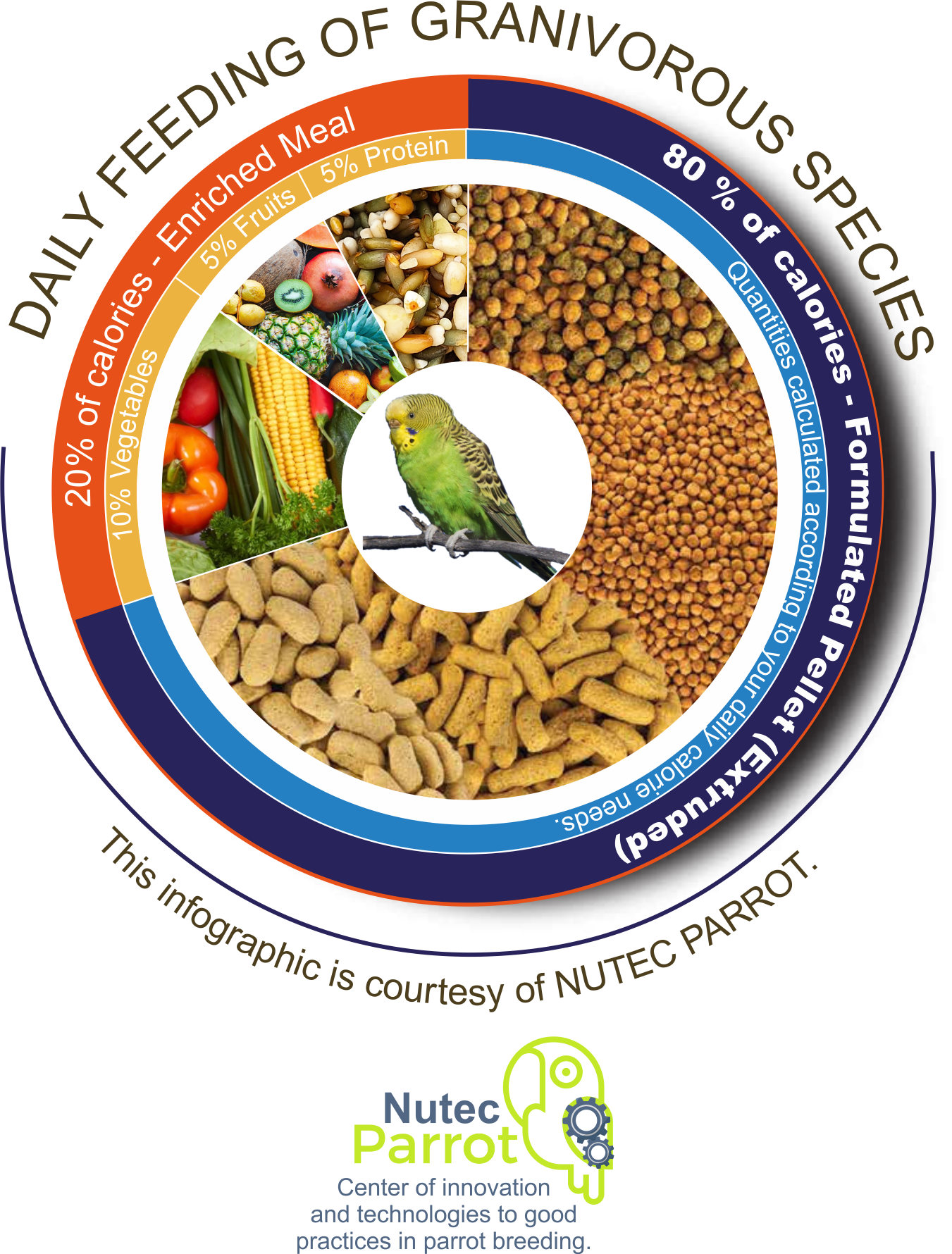
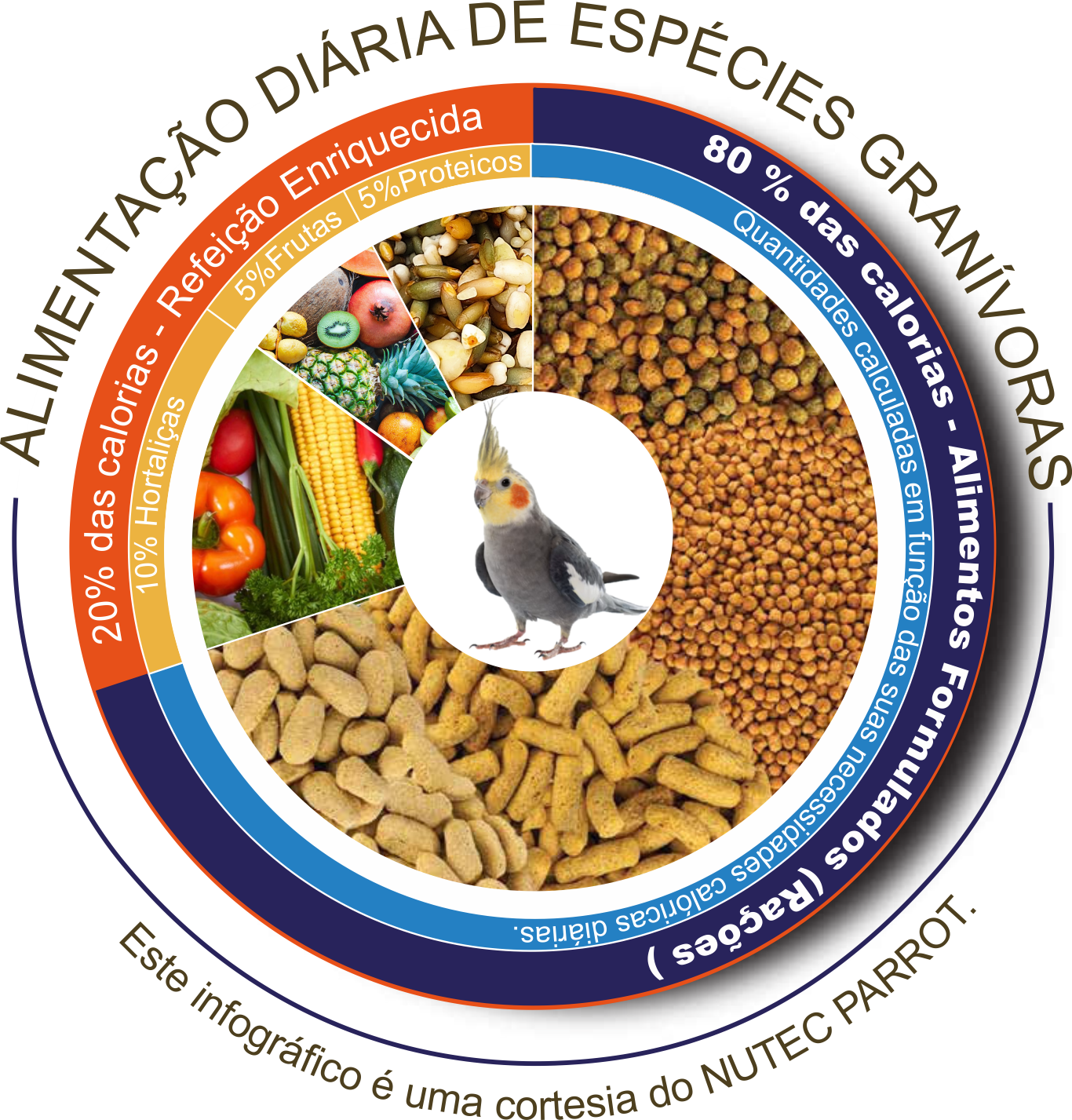
The ideal approach is providing balanced extruded pellets. Currently, the market offers specific commercial options for the “maintenance” and “breeding” phases of various psittacine species, which greatly facilitates management, ensures adequate nutritional intake for each stage, and eliminates food selectivity.
-
Supplementation and Enrichment:
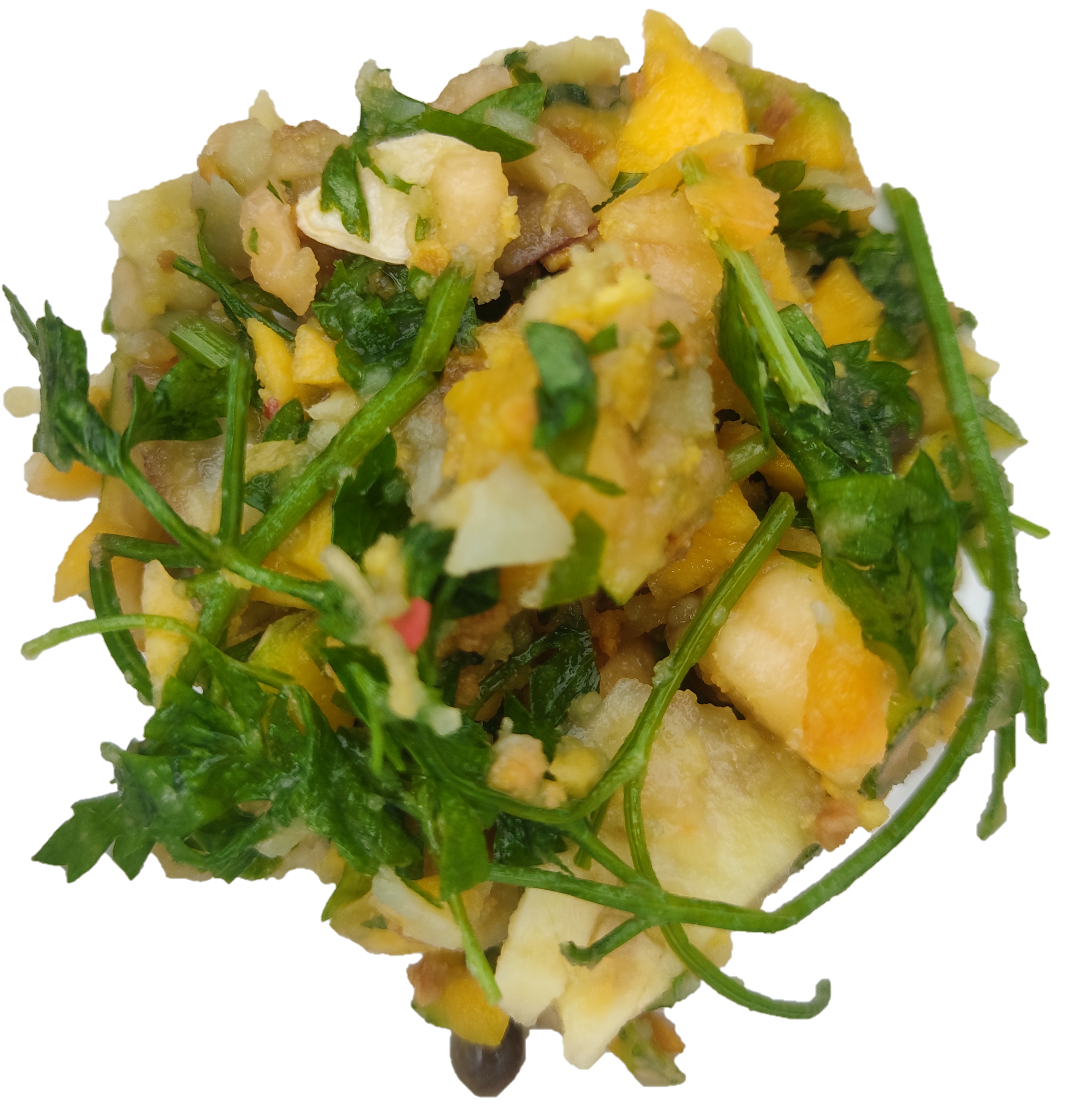
As I often say: “Pellets are a complete food, but not a complete diet.” Therefore, supplementation with fruits, vegetables, and other foods is recommended. This practice serves a dual purpose: in addition to nutritional value, it acts as environmental enrichment, reducing the predictability of the routine and stimulating natural behaviors.
-
Quality Water:
Water should be of good quality and available at all times. It is important, whenever possible, to analyze the aviary’s water source before the beginning of the breeding season to check for the presence of pathogens, such as Giardia sp., which can compromise the flock’s health.
-
The Complete Nutritional Cycle: From Nest to Rest
Strategic nutritional management does not end with egg-laying; it accompanies the entire reproductive cycle. The high-energy breeding diet should be maintained while the birds are feeding chicks in the nest, as the offspring’s nutrition depends directly on the diet provided to the parents. Furthermore, this extra energy-dense diet ensures a faster nutritional recovery rate for the breeding stock, accelerating the process of nutrient storage in organs and tissues, which reduces the interval between clutches.
After the breeding season, the diet should be gradually returned to that of the molting period, which occurs right after raising the chicks. This gradual reduction in energy supply acts as an inhibitory factor for reproductive activity, hormonally signaling that the period of abundance has ended and it is time to conserve energy for molting, thus naturally and healthily concluding the cycle.
-
Conclusion: Seasonal Nutrition is Strategic Management
Adjusting the diet seasonally—increasing the supply of fats and proteins before the breeding season and returning to the molting diet after the reproductive cycle—is a powerful tool. It mimics natural stimuli and acts directly on the birds’ physiology. Therefore, seasonal nutritional management is not just a recommendation but an indispensable strategic tool that allows the breeder to communicate with the bird’s physiology in the language of nature, promoting both reproduction and the flock’s well-being.
But how to do this correctly, without waste, without harming pellet consumption, or unbalancing the birds’ nutrition? How to offer complementary feeding adequately without compromising the intake of the main food, which is the pellet?
To be frank, you don’t need to be a nutrition expert; you need Dietbird. This is the easiest and safest way to implement dietary seasonality management and optimize your reproductive results.
DIETBIRD IS THE ONLY SOFTWARE IN THE WORLD SPECIFICALLY FOR PSITTACINES THAT PROVIDES CALCULATED, BALANCED, AND TAILORED DIETS, WITHOUT HAVING TO GIVE UP ANY FOOD. CLICK HERE AND GET STARTED NOW!